Showing posts with label apple. Show all posts

9/7/13

Samsung Galaxy Note 3 specs and features


The Samsung Galaxy Note 3 is official. And it looks pretty damn good. Coming in nine colours, the Samsung Galaxy Note 3 is radical re-thinking of Samsung’s traditional Note device. It’s also got a larger display, and all the usual Samsung software fluff.

Introducing the Samsung Galaxy Note 3 


Following the official launch on Wednesday, Samsung has now published a promo video to its YouTube channel detailing the Samsung Galaxy Note 3 in all its glory.
In the video you’re treated to “real world” examples of the Note 3 in action, as well as some of its new features – Air Command, a new S-Pen attribute, is a particular favourite of ours.
Initial reactions to the Samsung Galaxy Note 3 seem positive. KYM’s Paul Briden – now well into day three of his IFA 2013 saga – was very impressed by the handset, lauding Samsung’s choice of build materials and new S-Pen functionality.
“Despite having a daft name suggesting remote control of an aircraft carrier, its similar to Air Gesture in that you bring up a radial control wheel for various S-Pen functions, simply by hovering the pen and tapping the button. It works really well and I’d love to see more features like this in future iterations,” said Paul in his first look.
Check out the Samsung Galaxy Note 3 promo below, and scroll down for more details about specs, pricing and availability.
The 5.7-inch Full HD 1080p Super AMOLED display is larger than previous versions, but Samsung says the savings it has made with the overall proportions of the device mean that it doesn’t necessarily feel any bigger.
The handset runs Android 4.3 out the box and features 3GB of RAM. Multitasking has also been improved allowing users to run two applications at once side-by-side. During the Note 3's launch, Samsung execs showed off two ChatOn conversation bubbles running simultaneously side-by-side.
'Users can also run one application in two windows at the same time. For instance, users can read the news in one browser while conducting a web search in another, or send an instant message through ChatON to a friend while reading a message from another friend,' said Samsung.'Using Drag and Drop mode within the new Multi Window, you can easily drag and drop content such as a text or image from one window to the other in an instant.'
Samsung has fitted a larger 3200mAh batter (200mAh more than the Sony Xperia Z1), so battery life should be exemplarily.
Perhaps most startlingly Samsung has dropped the plastics. Instead the Samsung Galaxy Note 3’s back panel is finished in leather, complete with stitching – how very Gordon Gecko of you, Samsung.


Samsung Galaxy Note 3: It's not real leather!

But don't worry all you vegans out there, it's not real leather. Instead, Samsung has opted for a something we like to refer to as "pleather" – it's a composite material that looks like leather and feels like leather but doesn't quite smell like leather. We don't know for certain but we'd wager it is the same stuff that cheap trainers and football boots are made out of. Either way, Samsung assures us that it is perfectly suitable for vegans and that it also wipes clean very easily. Excellent stuff.

There’s a 13-megapixel snapper on the back and a 2-megapixel round front. With regards to connectivity you have: LTE, HSPA+, WiFi a/b/g/n/ac, NFC, Bluetooth 4.0 LE, an infrared blaster for using the Note 3 as a universal remote, MHL 2.0, and GPS/GLONASS.
The Samsung Galaxy Note 3 will get a release date on September 25.
Samsung has also done plenty of work to the S-Pen. The stylus is now more a part of the Galaxy Note 3 than ever before.
‘The S-Pen is now the key that unlocks all the power, functionality and features of the Galaxy Note 3.’
Air Command – hold the S-Pen on the Galaxy Note 3’s display and it brings up five Quick Commands in a fan-type menu. The idea here is to allow for quick note taking from anywhere in the Galaxy Note 3’s UX.
But it's not just Air Command. No, Samsung also detailed the following new attributes of its S-Pen at launch:


  • Action Memo allows users to handwrite a note and automatically execute a function or convert that handwritten information into formatted content. Action Memo can instantly initiate a call, add to contacts, look up an address on a map, search the web, save a task to a to-do list, and more
  • Scrapbook enables users to organise or track down content and information from various sources including the web, YouTube and Gallery in one place so that users can easily look back at collected content all at once. When consumers save content for future use, Scrapbook also collects source material or URLs allowing them to easily refer back to the original source
  • The Screen Write feature captures the full screen image of the current page on the device and allows users to write comments or additional information onto the captured image
  • S Finder allows users to expansively search for content on their device regardless of the type. By putting in keywords or filters such as date, location and content type, users can search related documents, events, communication threads, and even the Help page – all in one place. In addition, users can also search for hand-written content in their Notes and memo applications, as well as symbols and formulas
  • Pen Window allows users to use the S Pen not only for drawing sketches or writing notes, but now also for opening a small application window for a true multitasking experience. Simply by drawing a window of any size, anywhere on the screen, users can easily and quickly open another application window such as YouTube, calculator or Browser without pausing current activity on the screen
In case you missed it earlier, here's your chance to re-watch the launch of the Samsung Galaxy Note 3:
“We introduced the original Galaxy Note in 2011 and launched a whole new smart device category. The undeniable success of the Galaxy Note strengthened our conviction that consumers want higher quality features for smart devices and they want those new features to make their lives better,” said JK Shin, CEO and President of IT & Mobile Division at Samsung Electronics.
“Samsung Galaxy Note 3 is a powerful, original approach that enables users to tell the stories of their lives through dynamic and seamless expressions of their passions across work, play and life experiences. With a simple click of the S Pen button, users can unlock opportunities for self-expression, features that transform everyday activities into extraordinary events and access to new experiences delivered to them on Note 3’s larger screen”.

Locked up like Fort Knox

Keen to continue its growing presence in the global BYOD market space, Samsung has outfitted the Galaxy Note 3 with its Enterprise-grade KNOX software. Previously controlled by BlackBerry, the enterprise space is now wide open and both Apple and Samsung have made strong gains in the space during the past 12 months or so.


11/2/12

Apple release iOS 6.0.1


Back in September, it was in fact iOS 6 that went wild a couple of days prior to the iPhone 5’s release. There were issues reported with the OS the big one being the mapping issues. Well now, iOS 6.0.1 has arrived and while it’s not a major update, mapping issues still withstanding, the update fixes a number of issues around cell data and W-Fi.

List of included fixes in iOS 6.0.1. 
One of the other issues that users discovered was the OS' inability to switch between available and connected Wi-Fi networks and cellular data, resulting in users receiving massive bills from their carriers.
The only mention of Wi-Fi issues being resolved is the improved reliability of the iPhone 5 and iPod touch (5th) when connected to encrypted WPA2 Wi-Fi networks. Apple may have said they would be fixing the issue in the 6.0.1 update, but even Apple’s KB page around the 6.0.1 update doesn’t give much detailed information about what issues the update actually resolves. So hopefully this is
If anyone, who suffered from the cell/Wi-Fi data issue in the first instance, has updated to iOS 6.0.1, we’d love to hear if it’s fixed the problem, or if it has caused other services to break on you.

8/3/12

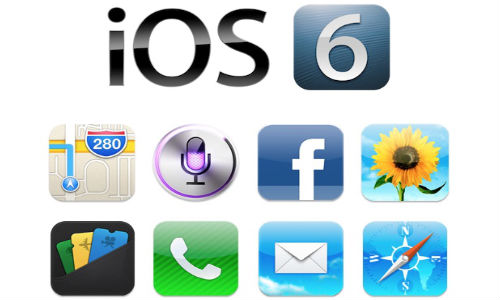
iOS 6: everything you need to know


iOS 6, the latest generation of Apple's mobile software for iPod touch, iPhone and iPad, has finally been unveiled - and from what we've seen so far, it's going to delight an awful lot of iOS users.
From badly-kept secrets to things that have been on wishlists for what seems like forever, here are the highlights.

The iOS 6 release date is Autumn

iOS 6 was released as a beta today, but the final version will ship "this Fall".
iOS 6: everything you need to know

iOS 6 introduces Passbook

Passbook is Apple's new e-tickets app, enabling you to carry electronic tickets for anything from sports events to plane travel, or to have a digital loyalty card. The tickets update too, so for example your airline ticket would send you a notification once your departure gate was announced or changed. Hopefully enough firms will support this one to make it work for all our everyday bits and bobs.
iOS 6: everything you need to know

Update: It you fancy seeing PassBook in action on an iPod in Hong Kong airport, then you're in luck because the chaps over as PassK.it have given it a spin - shame the airport wasn't ready for it though! Check out the video below.

iOS 6 has an improved phone app

The revised phone app offers smart reminders, so for example you can reject a call with a message saying you're busy, on your way, lost in a forest... You can also be reminded to call someone back when you leave your current location.

The new Do Not Disturb mode is particularly nifty: when new messages arrive, they do so silently and without the screen lighting up. If you wish, you can also tell your iPhone not to silence calls from a list of favourite callers, or to automatically silent repeat calls from the same person.

iOS 6 has Facetime over 3G

To tell the truth, we're amazed it took so long. If this takes off, the mobile operators will be very sad. Unless we use it abroad, in which case they'll be dancing on great big piles of our money.
iOS 6: everything you need to know

iOS 6 has a brand new Safari app

There are lots of useful improvements here: Instapaper-style offline reading, iCloud tab syncing and photo sharing website integration to make uploading less hassle. Less wonderfully, Smart App Banners enable websites to tell you about their sodding iOS apps more easily, which is just brilliant. Who among us hasn't thought, "man! I wish more websites told me about their iOS app on each visit!"?

iOS 6 Mail has VIPs and pull to refresh

Pull to refresh is here! Yay! You can also create a list of VIPs whose messages will appear on your device's lock screen and in a dedicated, separate mailbox. Sharing photos or videos from within Mail is finally here too, as are per-account signatures.

iOS 6 photo sharing is more selective

Instead of sharing everything with everyone, you can choose which photos should be shared with which people. We're not sure why you'd use this rather than, say, put a friends-only album on Facebook or Flickr. Anyone?
So how do the new iOS 6 features stand up against Android 4.0 Ice Cream Sandwich? We compare maps, browsers and voice assistants:

iOS 6 makes Siri more serious, and puts it in cars

Siri is able to understand a wider range of questions than before - the demo showed it understanding questions about sports scores, statistics and trivia, booking restaurants and finding out what's worth seeing at the cinema - but as yet it's unclear which, if any, of these features will make it to the UK. Local search is being rolled out worldwide, however, and there's support for more languages.
Siri is also going mobile: the new Eyes Free feature will put a Siri button on the steering wheel of Jaguars, Land Robers, BMWs, Mercs, Toyotas, Chryslers, Hondas, Audis and GM cars. The manufacturers have promised to support the feature in the next 12 months.

iOS 6 brings Siri to the iPad

...but only the new iPad.
iOS 6: everything you need to know

iOS 6 has Facebook integration


Apple promises "the best Facebook integration ever in a mobile device", and to our eyes it looks pretty much the same as iOS 5's Twitter integration: you can post photos, locations, URLs and so on to annoy your friends. The API is public, so non-Apple apps can share to Facebook too, and you'll be able to see your Facebook friends' App Store recommendations.
iOS 6: everything you need to know

iOS 6 has guided access for children

The new Guided Access feature enables you to disable certain parts of the screen so that children can't accidentally hit the wrong buttons. We're going to use it on the in-app purchase icons in every kid-targeted iOS game. Hahah!

iOS 6 has a new Maps app

New York, London, Paris, Munich, everybody's talking about - iOS 6 maps! Well, maybe not, but Apple's much-rumoured mapping system finally breaks cover. It's pretty, will have traffic information, doubles as a sat-nav system with turn-by-turn navigation, can be controlled via Siri and will probably be rubbish outside major metropolitan areas in the UK. Still, the new Flyover 3D views of major cities are lovely.
iOS 6: everything you need to know


Update: It's been confirmed that Yelp, a social networking, user review, and local search service, will be integrated into Apple's new mapping software - allowing you to check out restaurants, bars, clubs and cultural venues.
Update:Google is clearly concerned about loosing a huge percentage of the mapping market, as it's slashed the price of its Maps API by 88 percent following Apple's announcement of its own service.
Update: And Google isn't taking Apple's decision to dump it lightly, as it has rolled out its own 3D mapping update to the Google Earth iOS app - months before we'll see Apple launch its version. How do like them Apples?
Update: Apple is determined to dump Google Maps completely from iOS 6 - as it's been revealed that all third-party apps which previously used Google Maps will be redirected to Apple's new service.

iOS 6 dedicated Podcast app

A report from AllThingsD suggest that Apple may be about to givePodcasts their own application within the forthcoming iOS 6 software.

iOS 6 doesn't require password for free apps

With iOS 6, users won't be asked to enter their password every time they want to download a free application.
Once you have linked your iTunes account to your iOS 6 toting iPhone/iPad/iPod you won't need your login details again - unless you want to make a purchase, you know, with actual money. You also won't be asked for your password if you are re-downloading a previously purchased app.

iOS 6 has in-app purchase protection

In iOS 5.1 some naughty sods found a loophole which allowed them to steal in-app purchases, which may have cost some developers millions in lost revenue.
Apple has said that there will be no such problem in iOS 6 though, releasing a statement saying: "iOS 6 will address this vulnerability. If your app follows the best practices described below then it is not affected by this attack."

iOS 6 could sport Bluetooth 4.0 bridge

It's claimed Apple is working on a new feature in iOS 6 which will use Bluetooth 4.0 to act as a bridge between compatible devices, which could allow a future iPod to do a variety of tasks, such making calls via an iPhone running iOS 6.

iOS 6 should be adopted very quickly


Unlike other mobile operating systems, iOS isn't dependent on mobile operators approving updates: as a result 80% of Apple's 365 million iOS customers are using the latest iOS, compared to 7% of Android users. Once iOS ships, expect a similarly speedy take-up.

iOS 6 doesn't work on everything

iOS 6 supports iPhones from the 3GS onwards, the fourth generation iPod touch and the second and third generation iPad. Check our story for more on iOS 6 compatibility.
Update: Apple has now pushed out iOS 6 Beta 2 to developers, available on the iPhone 4S, iPhone 4 and new iPad. Why is this exciting? Because the cogs in the settings icon now spin... oh yes!
Update: Version iOS 6 Beta 3 has now been released by Apple, sporting a variety of bug fixes, improved keyboard and navigation editing capabilities.
Update: However developers have already managed to Jailbreak iOS 6 beta 2, so if you're someone who likes tinkering with handsets you might me able to get it running on the earlier iPhones and iPads.


8/2/12

Sharp: We're shipping iPhone 5 displays this month


Sharp is producing the screen for Apple's next iPhone and will have it ready to ship this month, the Japanese company said in a press briefing in Tokyo today.
According to Reuters, which was in attendance at the event, Sharp president Takashi Okuda told reporters that "shipments will start in August" of the screen for the upcoming Apple phone, widely presumed to be the iPhone 5. When pressed for more details on the device's screen, including when how large it might be, he declined to comment, according to Reuters.
However, Reuters is reporting today, citing a source, that the screen measures 4 inches, making it notably larger than the current iPhone's 3.5-inch display. Numerous reports have suggested that the iPhone 5 will come with a 4-inch display, though it's believed that the device itself won't be any wider. Instead, Apple has reportedly made the display taller, extending its available screen space.

Still, the news of Sharp shipping displays this month indicates that the iPhone 5 is marching toward a 2012 launch. Exactly when the device will launch remains to be seen, but the latest rumor suggests that Apple will unveil the handset on September 12 and then launch it nine days later, on September 21. Apple, of course, has stayed mum on that possibility.Although the iPhone 5's screen specs haven't been divulged, it's possible that the display is based on Sharp's IGZO technology, which delivers lower energy consumption and increased pixel transparency. Sharp announced in April that it was bringing its IGZO technology to mobile devices, igniting rumors that Apple might be one of the first beneficiaries of that. Neither company has said whether IGZO will be offered in the next iPhone.
CNET has contacted Apple for comment on Okuda's statement. We will update this story when we have more information.


11/15/11

Cracking Siri of apple


On October 14, 2011, Apple introduced the new iPhone 4S. One of its major new features was Siri, a personal assistant application. Siri uses a natural language processing technology to interact with the user.
Interestingly, Apple explained that Siri works by sending data to a remote server (that’s probably why Siri only works over 3G or WiFi). As soon as we could put our hands on the new iPhone 4S, we decided to have a sneak peek at how it really works.
Today, we managed to crack open Siri’s protocol. As a result, we are able to use Siri’s recognition engine from any device. Yes, that means anyone could now write an Android app that uses the real Siri! Or use Siri on an iPad! And we’re goign to share this know-how with you.

Demo

The best demo probably is Siri’s speech-to-text feature. We made a simple recording of us saying “Applidium vous souhaite une bonne journé”, and got a perfect result !

Sample_Siri_speech_to_text.zip

70.78 Ko Download
This sound sample never went through any iPhone, but nonetheless we got Siri to analyze it for us.

Understanding the protocol – A brief technical history

At Applidium we’re used to building mobile applications. The best way to chat with a remote server is HTTP, as it’s the protocol that is the more likely to work in any case.
The easiest way to sniff HTTP traffic is to setup a proxy server, configure your iPhone to use it, and look at what goes through the proxy. Surprisingly, when we did, we wouldn’t gather any traffic when using Siri. So we ressorted to using tcpdump on a network gateway, and we realised Siri’s traffic was TCP, on port 443, to a server at 17.174.4.4.
Going to https://17.174.4.4/ on a desktop machine we noticed that this server was presenting a certificate for guzzoni.apple.com. So it seemed like Siri was communicating with a server named guzzoni.apple.com over HTTPS.


As you know, the “S” in HTTPS stands for “secure” : all traffic between a client and an https server is ciphered. So we couldn’t read it using a sniffer. In that case, the simplest solution is to fake an HTTPS server, use a fake DNS server, and see what the incoming requests are. Unfortunately, the people behind Siri did things right : they check that guzzoni’s certificate is valid, so you cannot fake it. Well… they did check that it was valid, but thing is, you can add your own “root certificate”, which lets you mark any certificate you want as valid.
So basically all we had to do was to setup a custom SSL certification authority, add it to our iPhone 4S, and use it to sign our very own certificate for a fake “guzzoni.apple.com”. And it worked : Siri was sending commands to your own HTTPS sever! Seems like someone at Apple missed something!
That’s when we realised how Siri’s protocol is opaque. Let’s have a look at a Siri HTTP request. The request’s body is binary (we’ll get into that later), and here are the headers :
ACE /ace HTTP/1.0
            Host: guzzoni.apple.com
            User-Agent: Assistant(iPhone/iPhone4,1; iPhone OS/5.0/9A334) Ace/1.0
            Content-Length: 2000000000
            X-Ace-Host: 4620a9aa-88f4-4ac1-a49d-e2012910921
            
A few interesting things :
  • The request is using a custom “ACE” method, instead of a more usual GET.
  • The url requested is “/ace”
  • The Content-Length is nearly 2GB. Which is obviously not conforming to the HTTP standard.
  • X-Ace-host is some form of GUID. After trying with several iPhone 4Ses, it seems to be tied to the actual device (pretty much like an UDID).
Now let’s move on to the body. The body is some raw binary content. When we first looked at it with an hex editor, we noticed it started with 0xAACCEE. Oh, seems like header ! Unfortunately, we couldn’t understand anything of what was after that.
That’s when we took some time to think. As people who are used to designing mobile application, we know there’s one thing which is very important when talking over a network : compression. The bandwidth is often limited, so it’s usually a very good idea to compress your data. And what is the most ubiquitous compression library around ? zlib:“http://zlib.net/”. It’s a very solid library, really efficient and powerful (makes sense, it’s half french!). So we tried to pipe that binary data through zlib. But nothing came out, we were missing a zlib header. That’s when we thought “hmm, so there’s already this AACCEE header in the request body. Maybe there’s some more ?”. We developpers like to keep things packed. 3 bytes is not a good length for a header. 4 would be. So we tried un-zipping after the 4th byte. And it worked!
Now when we unziped the content, we got onto some new binary data. Not very understandable either, but some parts were text. Among them, one caugh our attention : bplist00. Hurray, it seems like the data is some binary plist. After fiddling a little bit with that binary stream, we figured out it was made out of chunks :
  • Chunks starting with 0x020000xxxx are “plist” packets, xxxx being the size of the binary plist data that follows the header.
  • Chunks starting with 0x030000xxxx are “ping” packets, sent by the iPhone to Siri’s servers to keep the connection alive. Here xx is the ping sequence number.
  • Chunks starting with 0x040000xxxx are “pong” packets, sent by Siri’s server as a reply to ping packets. Without surprise, xx is the pong sequence number.
And deciphering the content of binary plists is very easy, you can do it on Mac OS X with the “plutil” command-line tool. Or in ruby with the CFPropertyList gem on any platform.

What we learned

We did really learn a few interesting things about how the iPhone 4S talks to Apple’s servers :

The audio data

The iPhone 4S really sends raw audio data. It’s compressed using the Speex audio codec, which makes sense as it’s a codec specifically tailored for VoIP.

Signature

The iPhone 4S sends identifiers everywhere. So if you want to use Siri on another device, you still need the identfier of at least one iPhone 4S. Of course we’re not publishing ours, but it’s very easy to retrieve one using the tools we’ve written. Of course Apple could blacklist an identifier, but as long as you’re keeping it for personal use, that should be allright!

The actual content

The protocol is actually very, very chatty. Your iPhone sends a tons of things to Apple’s servers. And those servers reply an incredible amount of informations. For example, when you’re using text-to-speech, Apple’s server even reply a confidence score and the timestamp of each word.

What’s next ?

Here’s a collection of tools we wrote to help us understand the protocol. They’re written mostly in Ruby (because that’s a wonderfully simple language), some parts are in C and some in Objective-C. Those aren’t really finished, but should be very sufficient for anyone technically inclined to write a Siri-enabled application.


9/26/11

Apple slashes fourth-quarter iPad orders, report


Apple has cut iPad orders from manufacturing partners, Bloomberg is reporting, citing an investment report from JP Morgan Chase.
Apple has reportedly cut fourth-quarter iPad shipments by 25 percent, Bloomberg says, per JP Morgan Chase. The analysts at JP Morgan said that this is the first time they've seen Apple slash iPad shipments since the tablet launched last year.
If Apple has, in fact, cut iPad shipments for the fourth quarter, it will have a profound impact on many of its suppliers, including Hon Hai Precision. According to the analysts, Bloomberg says, Hon Hai was planning to ship 17 million iPads in the fourth quarter, but will now only ship 13 million units.
It's unclear why Apple might want to cut back on iPad shipments, if that is in fact what's happening. Perhaps it ordered too many iPads in previous quarters, or it's slowing down iPad 2 production to prepare for the eventual iPad 3, or there might be other supply chain management and spending issues involved.
What's more, even with those purportedly reduced shipments, analysts aren't ready to say that Apple will sell fewer iPads in the fourth quarter. According to Bloomberg, JP Morgan analyst Mark Moskowitz will maintain estimates that Apple will ship up to 12 million iPad units in that quarter, even with reduced orders to suppliers.
If Apple can keep up its momentum, and sell as many iPads as researchers expect, this could be another big year for the tablet. Last week, research firm Gartner reported that it expects Apple to sell nearly 47 million iPads this year, up from the 14.7 million it sold last year. Even more impressive, Gartner believes Apple will ship nearly 149 million iPads in 2015.
Apple did not immediately respond to CNET's request for comment on the Bloomberg report.

8/31/11

Amazon prepping a 7-inch tablet for October?


Amazon could have a 7-inch tablet ready for customers in a couple of months, according to a new report from DigiTimes.
Citing anonymous sources at component suppliers, DigiTimes said today that Amazon will start shipping a 7-inch tablet in October. The company will then follow that up with a 10.1-inch tablet that it will begin producing in the first quarter of 2012.
DigiTimes' report seems to fall in line with what the latest rumors on the possible Android-based Amazon tablet have been suggesting for months now. In July, for example, a few reports cropped up suggesting Amazon will either offer a device with a 9-inch display or deliver two tablets with 7- and 10-inch options. In either case, those tablets were expected to be made available later this year.
If and when Amazon offers up its first tablet, the device could be priced quite cheaply compared to some of its competitors. Earlier this month, industry analyst Tim Bajarin said that Amazon could sell its slate for as little as $249. At that price, Bajarin said, Amazon would likely lose some money on each device it sold--he pegged the shortfall at about $51--but the deal would help the company quickly attract customers looking for a device that isn't as expensive as some of its competitors, like the iPad 2, which starts at $499.

8/29/11

Tokyo runner makes 13-mile Apple logo for Jobs


Runner Joseph Tame ran a half marathon in the shape of the Apple logo to pay tribute to Steve Jobs.
(Credit: New Launches)
Steve Jobs' resignation as CEO of Apple has prompted emotional words from consumers, tech leaders, and journalists alike. For some, however, words can only say so much.
Media producer Joseph Tame showed his appreciation in a more visual way, using two iPhones (plus his legs) to map the equivalent of a digital heart for Steve Jobs. Tame, a marathon runner from Tokyo, ran 13 miles in 2 hours, with a specific route in mind: the Apple logo.
Using the Runkeeper app to track his path through the center of Toyko, Tame's iPhone automatically drew the Apple logo here. The route starts out near the Imperial Palace, goes through Roppongi, and weaves around Shinjuku to Kagurazaka.
This is Tame's running path, according to his RunKeeper account.
(Credit: Screenshot by Boonsri Dickinson/CNET)
The "bite" in the apple curves around the Imperial Palace, which is the main residence of the emperor (and might be the most expensive square kilometer in the world). Upon closer examination of Tame's running path, it appears he is running through buildings (we're assuming that's his tracing software's fault). Not that running a half marathon isn't impressive in itself.

Tame--creator of a wacky running harness called iRun that has two iPhones to shoot video and two to run GPS and networking software, among other features--has a reputation for drawing odd "GPS trail art." His other shaped routes include a GPS Hello Kitty, a nine-mile Twitter bird, and an elephant.
So why his affinity for Apple? Tame tells New Launches that "having a iPhone really has changed my life here in Tokyo. Here in Japan it's like a lifeline (even more so now it can warn me when an earthquake is about to hit)."
During the Jobs tribute run, Tame's average heart rate was 155 beats per minute. Now that's one way to show his Apple love.


Apple files patent application to learn the sound of your voice

Apple files another patent application: User profiling for voice input processing.
(Credit: Screen Shot by CNET's Boonsri Dickinson)
Apple, which recently filed a patent application for a technology to keep screens on mobile devices free of fingerprints, is upping the ante by filing for a new application that could keep you fingers from even touching the screen in the first place.
The application is for what Apple calls User Profiling for Voice Input Processing, which it describes as being able to identify your voice and understand complex commands. Need to make a playlist? No problem, just ask. Need to call your friend? Just say so. The patent application says all these commands are possible: play, call, and search. According to the application, it would allow the user to "find my most played song with a 4-star rating and create a Genius playlist using it as a seed."
Apple's interest in voice commands is not new. In April 2010, Apple bought Siri, a small company that created an app that let users operate their iPhone with voice commands. Apple is expected to deeply integrate voice navigation technology from Siri into the upcoming iOS 5.
CNET's Josh Lowensohn previously wrote that Siri's voice technology "can listen to user voice commands to make phone calls and control music playback. Hints that Apple has been planning to improve it have been numerous, from patents to job postings."
Apple competitors are also on the voice path. Microsoft uses speech recognition services in its Windows Phone 7 OS and Google integrated Voice Control into its Android platform.

8/26/11

What could Apple look like three years from now?

ditor's note: This story was co-written by CNET staffers Donald Bell, Greg Sandoval, Josh Lowensohn, Kent German, and Scott Stein.
Most Apple watchers figure very little will change at Steve Jobs' company over the next few years. There's plenty of product plans in the works and his executive team--with a few exceptions--looks set for the next few years.
The real question is what happens after that, when the plans that will be made without Jobs in Apple's corner office begin to bear fruit, or languish.
The company, which has grown to become the second-most valuable in the world following Jobs' return in 1996, has made a big part of its business the promise of the future. New products like the iPod, iPhone, and iPad have set Apple apart from being just another Silicon Valley hardware and software maker and into a taste maker.
Much of that taste has been attributed to Jobs, whose attention to detail and focus on secrecy has been the stuff of legend. A Jobs anecdote shared by Google's Vic Gundotra yesterday noted that Jobs once called him on a Sunday morning to discuss the importance of fixing the gradient in a single letter of Google's logo so that it would appear just right on the iPhone's screen. Will Apple still have that obsessive attention to detail without Jobs running the show?
The first place to look is new CEO Tim Cook, a seasoned Apple veteran who served as Jobs' day-to-day replacement when Jobs went on medical leaves in 2004, 2009, and in January of this year.
Cook's been Apple's chief operating officer for seven years and a fixture on financial calls, shareholders meetings, and public events. But one big difference between him and Jobs is that he's not the showman. He's not the one whose presentation style people have written books about, and that has people running nearly on top of each other into auditoriums to see pitch. Instead, Cook's been a no-nonsense, methodical speaker whose presence at Apple events typically involves taking the stage to provide updates on the company's business.
But behind the scenes, Cook has been instrumental in changing how Apple makes its products, including the companies it gets parts from, and who puts it all together. That, along with major strategic decision making, has vaulted the company into becoming hugely profitable and increasingly competitive. No doubt that same strategy will continue under Cook's guidance, though one of the big questions now is who will take Cook's old spot and whether that person comes from inside the company or from elsewhere.
Management plans
As noted in a story yesterday, Apple's been ready for this change, due in no small part to Jobs' first medical leave. The company has a succession plan in place, which it does not share with public due to what it says would give competitors a potential strategic advantage. Cook's placement at the top of the company is a piece of that plan.
Cook is joined by Scott Forstall, the SVP of iOS software, as well as Jonathan Ive, the SVP of industrial design. In an Apple of the future without Jobs at the helm, Forstall and Ive's roles will be under a microscope. Jobs is credited with pulling Ives out from designing prototypes of products that were going nowhere and bringing him into the inner circle of the company's design efforts. The two men are also said to have a mutual admiration and taste for design that's driven the company to create some of its most iconic products.
Forstall taking the wraps off iOS 3.0 in 2009.
(Credit: James Martin/CNET)
The question now is how Apple's design ideology will continue to evolve. Jobs will still be chairman of Apple's board of directors and involved in strategic decisions, but will that include regularly scheduled looks and inputs at each stage of new product design too? There's also the question of how much longer Ive intends to stay on in that role, or if he too is being groomed for a higher position within the company. Rumors swirled earlier this year that Ive was contemplating a departure from Apple to relocate to the U.K. following the completion of a three-year stock deal, yet Ive is still here and still in a place to shape the company's design ethos.
Then there's Forstall, who came to Apple from Jobs' NeXT venture. Forstall's software roots run deep, helping to craft the OS X operating system, and later iOS, the software that powers the iPhone, iPad, iPod Touch, Apple TV, and likely products that have not yet been announced. With iOS products already making up more than half of the company's latest quarterly revenues, how that software evolves and pushes Apple's hardware becomes increasingly important.
One other executive wild card is who Apple chooses to replace the departing Ron Johnson, the company's retail chief who is credited for successfully turning Apple's retail efforts into a 300-plus store empire that's become one of the most profitable per square foot. Earlier this year, Johnson announced that he was departing to become J.C. Penney's CEO, and Apple has not yet said who his successor will be. Apple's retail effort has become one of its big differentiations from competitors, and the person who heads up that effort has a hand in shaping where it goes.
The legacy of the iPod
At the heart of it all is Apple's product line up, and in the immediate future one product whose future is uncertain, is the iPod.
The foundation of Apple's present-day domination of both mobile computing and media rests entirely on the iPod. Its debut in 2001 was an uncharacteristic move for a name-brand computer manufacturer (then known as "Apple Computer"). But as the iPod transitioned from a high-priced novelty into a global cultural phenomenon, it changed the perception of Apple forever.
Apple's iPod.
Apple's iPod.
(Credit: CNET Networks)
With the iPod came iTunes, and with iTunes came the end of an entire music retail industry built around physical media.
For many people, the iPod also represents the first Apple product they ever owned. As a hip and relatively affordable piece of technology, the iPod was Apple's foothold into the mass market. Through the iPod's wild popularity Apple built the momentum and brand awareness that made products like the iPhone possible.
Today, while Apple continues to sell and support an entire line of iPods (iPod Touch, iPod Nano, iPod Classic, and iPod Shuffle), it's clear that the glory days of the dedicated media player are behind us. Sales of the iPod have been on a downward trend, and Apple's most popular products--its iPhone and iPad--have distilled the iPod's functions into a single "iPod" app.
Since the arrival of the iPhone, people have speculated that Apple would one day discontinue manufacturing iPods. If that day comes, it will likely be under Cook's leadership. The iPod is no longer a major source of revenue when compared with the iPhone or iPad. That said, the iPod brand is still extremely meaningful. Also, the iPod Touch is one three Apple devices running iOS that plays an important in expanding Apple's installation base of active iOS users in their fight against rivals such as Android.
The phone of the future
Just as the iPod did much to advance the MP3 player, the iPhone had a huge role in taking the smartphone mainstream. It wasn't the first smartphone, to be sure, but it did take the technology out of the hands of corporate worker bees and put it in the hands of everyone else. Just more than four years after the first iPhone went on sale, we now have four models to contemplate, with one more on the way in the next couple of months.
The original iPhone, in a protective display following its early 2007 debut.
(Credit: Declan McCullagh/CNET News)
In the immediate future, at least, the iPhone family will continue its steady march. Whether it is a fully revamped iPhone 5, or a minimally tweaked iPhone 4S, the design and features of the next handset are already set. And at this point, it may be already be in production. Yes, it's now unlikely that Jobs will do the official unveiling, but other execs have stood in for Jobs at media events before. If it adds hot news feature like 4G and makes it to new carriers like Sprint and T-Mobile, it will be a winner. And even if it's just an incremental upgrade, the appeal of the iPhone won't wane anytime soon.
How the iPhone develops during the next few years, however, will be interesting to watch. Apple's iPhone roadmap through the next couple of iterations is no doubt set. Absolutely, we'll see tweaks and changes, but the fundamentals of the design will likely remain the same for some time to come. And even though Jobs may not have a hand in shaping its evolution, his direction in creating the first iPhone, which continues to serve as the device family's foundation, is far more important.
The iPhone's future will depend on Apple's ability to stick to the characteristics that has made the device a success. Keeping its focus on attractive design and a clean user experience will be key. What's more, the company will have to respond to innovation in cellular technology by steadily adding new features through hardware or through changes to iOS. But above all, the company will have to retain its uncanny ability to take that technology and make it different and (sometimes) better. Finally, Apple will need to spread the iPhone's reach to more carriers in the United States and around the world. Verizon Wireless was a start, but more should come. Perhaps we could even see it land at up-and-coming prepaid operators like MetroPCS.
Of course, Apple will face strong competition for other smartphone platforms. Though WebOS is gone, Android will continue its steady drive--Google's acquisition of Motorola Mobility now adds an interesting element to that story--and Nokia and Windows Phone 7 could very well could up something cool. Responding to those challenges will take some effort, but Apple has always excelled at giving its products a unique and "must-have" aura. And even with Jobs stepping down as CEO, that likely will continue.
From iPhone to iPad
That brings us to the iPad, arguably Apple's most unique contribution to the tech world. Unlike the MP3 player, the personal computer, or the smartphone, the tablet had no clear precedent of success. We're still scratching our heads figuring out how Apple was able to take the tablet concept off the technological scrap heap and shape it into one of the most successful and influential products in recent history.
That no one has been able to create a popular rival to the iPad only adds to our confusion. It could turn out that the iPad's popularity is bolstered more by Jobs' presence than Apple would like to admit. When Jobs presented the first iPad on stage by sitting down in an comfy chair and convincing us of its place between smartphones and laptops, it was easy to take a leap of faith--we had done it before. He was the magician who had pulled the iPod and the iPhone from his hat, and he was coming back with yet another trick.
Apple's latest iPad.
(Credit: Apple)
But as Apple's newest product, the iPad is also the most susceptible to weakening under Cook's reign. Competitors are racing to match the iPad's capabilities and price, and the stakes are high. As PC laptop sales are flagging, there's reason to believe that the tablet represents the future of the entire personal computer industry. If so, competitors will continue to work hard to diminish the iPad's success or die trying.
The cornerstone of the iPad's success is the cornerstone of iOS in general: apps. Short of Google, few rivals have been able to match the app selection, quality, and pace of development that Apple has been able to achieve by work closely with their developer community, and rewarding developers with a healthy cut of app profits. Should Cook loose this grip on the best and brightest app developers and top-tier mobile games, the iPad could loose some of its "magic" and consumers could be more willing to test out the competition.
Who knows how much of Apple's app developer loyalty can be credited to Jobs' charismatic leadership, but Apple would do well to show this community as much love as they can during this time of transition. Apple's profits and their products have become inextricably tied to apps, and a developer exodus could be their undoing.
Macs at the core
Long before the the iPod, iPhone and iPad, there was the Mac. The Macintosh represents the core of Apple's brand--literally.
While iOS has taken the spotlight in recent years, Apple was built on the Mac, and Mac sales have grown recently. Over the past few years, Apple's line of Macs has shifted to designs with ever-more-integrated construction, favoring sleekness over customization. The MacBook Air is the pinnacle of that aesthetic: long-life integrated battery, with non-replaceable RAM.
Optical drives are already disappearing on Macs--see the new Mac Mini and MacBook Air--and while it would be aggravating, expect them to continue to disappear as Apple's Mac App Store and downloadable software services take precedence. If desktop iMacs end up losing their optical drives altogether, expect an even thinner, lighter design to emerge as a result.
"As Steve Jobs put it, computers are like trucks. They're utilitarian, and people expect more flexibility out of them than devices like the iPhone and iPad. No matter what happens, Macs aren't likely to give up that aspect."
Similarly, expect a trajectory where Mac OS X inevitably fuses with iOS at some point, in spirit in or in actuality. Apple's latest OS X update, Lion, already borrows heavily from iOS visual design and multi-touch vocabulary. Apple's most recognizable forward-looking computing products are now the iPhone and iPad, and Macs will likely be aggressively nudged to join them in design spirit--though whether they'll ever make the jump to full touch screen remains to be seen, though Jobs noted just last year that the company had once tried it and said that the results were "economically terrible."
As Jobs put it, computers are like trucks. They're utilitarian, and people expect more flexibility out of them than devices like the iPhone and iPad. No matter what happens, Macs aren't likely to give up that aspect. Macs may increasingly have interfaces designed to easily appeal to iOS users--especially young ones--but, for the next few years, expect the back end of the software to remain deep and customizable.
Slimmer, smaller, and maybe even cheaper: this looks like where Macs are destined to go next. And, ironically, the rest of the PC world is following in lock step--Intel's "Ultrabook" initiative is all about bringing the look and feel of the Mac hardware to the Windows world.
Apple in the living room
Not to be left out of the hardware talk is Apple's nascent steps into the living room with the Apple TV. It's a funny sort of product: considered a "hobby" by Apple, it's low priced enough to be a stocking stuffer but limited enough in what it does to still avoid being a must-have purchase for many.
That seems destined to change. The Apple TV now acts as a bridge for wireless video and audio thanks to AirPlay, which works with Macs, iPods, iPhones, and iPads. That wireless connectivity seems likely to be built into a next generation of products--monitors, TVs, or something similar--as well as being offered up via a small box.
Apple TV.
Apple 's Apple TV device.
(Credit: Sarah Tew/CNET)
The next step for Apple TV is to become a full-fledged unit for gaming and media services. Extending existing iOS apps to the Apple TV seems like a no-brainer--HBO Go, Hulu Plus, and others--as well as becoming a method of playing Nintendo Wii-like casual games on a big screen. And, the more that the iPhone and iPad can act as hyper-intelligent smart remotes to interact with that content, the more we're likely to see apps that take advantage of that dual-screen potential.
It seems logical, perhaps, that Apple might synthesize its existing monitors and the Apple TV technology to create a more flexible monitor that doubles as a TV and home entertainment device, maybe even with iOS installed on it: after all, TVs are increasingly offering built-in apps of their own. A true Apple TV could also act as a flexible home monitor for wireless computers.
Look for Apple to extend its iCloud model to the Apple TV, allowing users to stream their full collection of cloud-based purchases on an on-demand basis; this already works with TV shows, and movies will no doubt follow. Home entertainment still remains an unconquered territory outside of cable interests, with Google, Amazon, Netflix, and set-top box manufacturers offering a landscape full of patchwork content. Apple stands the most to gain by finding a clear product that synthesizes home entertainment before anyone else does and doing it in a way that's clear and packed with better content. That depends on licenses with Hollywood content, but Apple's done the same with publishers and the music industry; the Apple TV seems set to finally take a leap into a more pushed-to-the-forefront product.
Music and a future in the cloud
Besides shaping Apple's products and business strategies, music is one of the areas where Jobs has left the biggest imprint.
The iPod digital music player was one of pillars of the Apple CEO's success, certainly after returning to the company in 1996. Later, the iPod, in combination with Jobs' iTunes software and music store of the same name dismantled and rebuilt the music experience from the way consumers listen, buy, and manage their songs.
Apple used that strategy to become the No. 1 music retailer in the land, extending its influence throughout to videos and movies and to build the kind of muscle to sometimes dictate terms to the powerful record labels. And there's no reason to believe any of that will change anytime soon now that Jobs hands the reins to Cook.
When Cook looks out over the digital music landscape, he will see a sector pretty much in Apple's control. The industry is supposedly shifting to the cloud. Music fans will no longer store and manage songs on PCs, but will companies to do this for them from their servers. Consumers, sometime in the near future, are expected to access their music from these third-party servers from Web-connected devices.
There are lots of new and large competitors, Google and Spotify among them. But Apple has developed its own version of this new distribution with the iCloud. Cook will also see iTunes executives who have been around for years. Apple's gadgets, especially the iPhone, are still the favored music players, and Apple's hold on music appears as secure as ever.
Apple's iCloud.com sign-in page.
(Credit: CNET)
But what about the relationships that Jobs forged over a decade of dealing with top label honchos? Well, Jobs can still get on the phone with Sony Music Group chief Doug Morris, who once called Jobs the "smartest man in music." Before Sony, Morris was chairman and CEO at Universal Music Group for years.
Other than Morris though, most of the honchos at the labels are new. Jobs has watched as leaders of the top four record labels have come and gone. Edgar Bronfman Jr., Warner Music Group's former CEO, stepped down last week. And for a while, it seemed EMI had CEOs on a conveyor belt.
So what about Jobs' ideas, his attention to detail, his ability to know what consumers want before they do?
Those are the intangibles that Apple could miss the most. Jobs was the one who recognized that after Napster came along and digital piracy began to grow that the labels were vulnerable and he could all but dictate his own terms for a legal online service. It was Jobs who was inspired after seeing one of the first Walkman tape players to create the iPod. There were other digital music players out there, but it was Jobs who knew how to build and market one that consumers would flip over.
Does Cook have the stature, the clout, and the credibility with consumers to call the label chiefs "greedy" and "technologically innocent" so that when he writes an open letter calling for the music labels to strip their songs of copy protections, public scorn rains down on them?
That's what Jobs did in 2007.
Therein lies some of the mystery about how the next few years shake out. Cook is not Jobs, but that doesn't mean Cook can't handily carry out plans Jobs set in motion years ago, as well as put into place plans of his own. And don't discount the fact that Jobs continues to stay on as chairman of Apple's board.
Again, what will continue to be of intense interest is what, if anything changes in the near-term under Cook's leadership. Will those changes be Cook's doing, or part of a plan Jobs and Apple put together years ago? And if hard decisions are made, where did they stem from in the first place?
That guessing game can be played the same was as trying to figure out what service or Apple will release next, which is to say not easily. Something that Jobs' scaled back role is unlikely to have changed.

Related Posts Plugin for WordPress, Blogger...